Our People
Learn to Enjoy the Climb
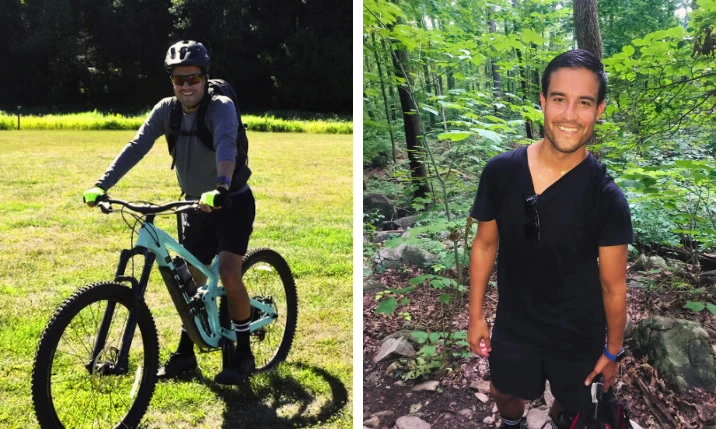
When Stephan Baccan, area sales director in the Southeast in the Tissue Technologies division, was asked to be the focus of our July colleague spotlight, he provided the perfect introduction with his advice to someone joining Integra- “think about your legacy here and work backwards. If you are looking to be great, recognize the difference between being great for one year vs. being consistently great. The consistently high performers are just built differently with their dedication and output.”
At Integra, Stephan has always felt that he could affect change by speaking up with a good solution to help solve a complex problem. This has helped him feel part of something bigger than his own role. Since joining the company in 2009, Stephan has had five different roles - account manager, regional team leader, regional business manager, national business development manager and currently, area sales director. What he has learned along the way is that he could not have taken on these new roles without the help of many amazing peers and leaders, such as his fellow area sales directors- Rob Thuman, Bethany Mackey, Corey Diehl, enterprise director, John Quirk and leaders Bob Davis and Chris Bartlett, who are even better people.
This month, the talent development team launched a new professional development series called Knowledge Bursts. The first Knowledge Burst session focused on self-awareness. Coming up through the sales organization, Stephan has honed his self-awareness and has grown accustomed to dealing with setbacks and at the same time many breakthroughs in his career. As he shared, “I am someone with a ‘pretty excitable personality’ and have had to teach myself to remain level-headed. That means never getting too up after the wins and never getting too down after the losses or when facing challenges. Sales is not a destination game; it’s a never-ending climb. Learn to enjoy the climb and you’ll be much happier.”
Stephan’s professional development stemmed from simply asking to be involved, being curious, reading (a lot), asking thoughtful questions, and collaborating! In his opinion, collaboration is the hardest thing to achieve in business with very few people who are actually good at it. Good collaborators have high levels of emotional intelligence and equal measure of workplace intelligence. If you can see through the lens of those whom you are trying to collaborate with, you can find a mutual win that perpetuates that collaboration. Most importantly, and key for Stephan, is collaborating with people who are not afraid to challenge him and vice versa. Stephan also is not afraid to admit where he needs to learn more. For example, one of his insecurities before he became a regional business manager was contracting considerations, so he set out to learn as much as possible on this. This helped catapult him into the national business development manager role three years later. His ability to ‘lean in’ helped him progress his career opportunities.
While Stephan has built a successful career over the last 15 years, he is the first to advocate for work/life balance with a focus on his family and his favorite hobbies - hiking, biking, and vacation. He loves spending time with his wife and daughter and just recently celebrated the graduation of his little brother, who he has been mentoring for the past 15 years as part of the Big Brothers of America program.
Stephan is also very proud of the rich history of our company as we celebrate our 35th anniversary. His most memorable moments are hearing about the many patient stories from surgeons and how they have used our products to help improve their lives. To see these patients move forward with their quality of life is a beautiful thing. While the Tissue Technologies team has faced its share of challenges, Stephan would like to remind people of how compelling the Integra business is with our leading products and how well-positioned the company is for the rapidly changing wound reconstruction landscape. As Stephan shared, “unfortunately, with the increase in diabetes and other chronic diseases, I see the patient populations that we help to treat increasing over the coming years. If we can harness our technologies across the different sites of care into an increasing patient population, I can see a future where we exponentially help restore even more patients’ lives.”