about hydrocephalus background

Hydrocephalus Care

What Shunt Systems Are Available?

Shunt systems come in a variety of models, but always have two similar parts:

  1. Catheters or tubing, which transport and divert the cerebrospinal fluid (CSF) from the ventricles to either the abdominal cavity or right atrium of the heart
  2. A valve that regulates the flow of CSF from the ventricles

Adjustable valves allow the surgeon to choose a pressure setting for the valve based on the needs of the patient.

Many shunt systems also have a flexible flushing chamber called a reservoir. The reservoir serves several important functions. It allows the doctor to remove samples of CSF for testing using a needle and syringe. The doctor also may inject fluid into the shunt system to test for flow to ensure the system is working properly.

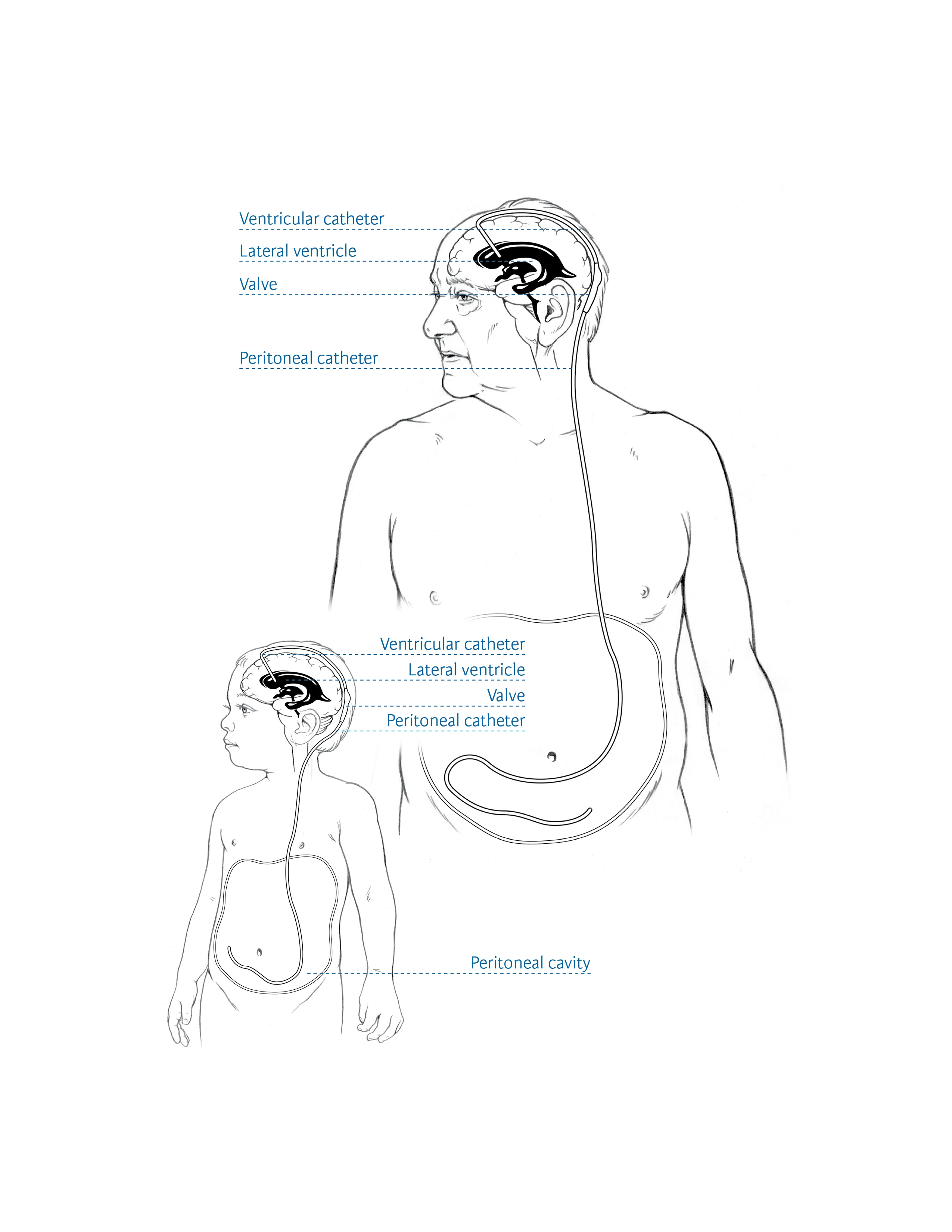
The parts of a shunt are named according to where they are implanted (placed) in the body. For example, the portion of the tube that is inserted into the ventricles is called the ventricular catheter. The peritoneal catheter is the portion of the tube that drains CSF into the abdominal or peritoneal cavity. If a drainage tube is placed into the right atrium of the heart, it is called the atrial catheter.

To get a better understanding of what a shunt system looks like, ask your doctor or nurse to show you samples of the shunts they use.

All of the components of a shunt system are made from materials that are well-known to be tolerated by the body. For this reason, the entire shunt system is implanted under the skin. There are no external parts.

How Is the Shunt Surgically Implanted?

The shunt is implanted surgically and the procedure is relatively short. Surgery to implant a shunt is performed in the operating room under sterile conditions, using general anesthesia.

A neurosurgeon, a doctor specially trained to operate on the brain, performs the operation. An incision is made on the scalp, and a small hole is made in the skull to allow placement of the ventricular catheter. This allows the CSF to drain away from the brain.

Another incision is made in the abdomen, and the valve unit and associated tubing is passed under the skin between the scalp and the abdominal incision.

The surgeon connects the valve unit to the ventricular catheter and then inserts the end of the peritoneal catheter into the peritoneal cavity of the abdomen.

Alternatively, if the drainage catheter is to be placed in the heart, the surgeon will introduce the catheter through an incision in the neck and pass the tube through various blood vessels until the catheter is positioned in the right atrium of the heart.

Once the shunt system is in place, the one-way valve will automatically open to drain excess CSF whenever the pressure in the skull exceeds the valve setting.

Hydrocephalus diagram

What Are the Potential Complications?

Patients and/or their caregivers also must be alert for the signs and symptoms of potential shunt complications. The major complications of shunting are obstruction, infection, and overdrainage.

Obstruction

When a shunt malfunction occurs, it is usually due to a partial or complete blockage of the system. The blockage can occur anywhere in the tubing or the valve and prevent the CSF from draining properly. If not corrected, this will cause the original hydrocephalus symptoms to return.

Infection

A shunt infection usually is caused by the patient’s own bacterial organisms and is not acquired from exposure to other people. Infection should be suspected if there is any unusual redness or swelling of the wounds or along the shunt system.

Overdrainage

This is caused by too much CSF being removed from the ventricles. This will cause the ventricles to decrease in size to a point where the brain may pull away from the skull. This may cause bleeding and require further surgery.

Other complications which can lead to the return of the hydrocephalus symptoms include underdrainage, disconnection of the tubing, and mechanical failure of the valve. If any symptoms occur or you suspect any complications, contact your doctor immediately.

What Kind of Follow-up Is Required?

Generally, patients with an implanted shunt system are not restricted in their daily activities, except those involving great physical exertion. Your doctor will discuss with you any restrictions that may be advisable.

Because hydrocephalus is an ongoing condition, patients do require long-term follow-up care by a doctor. Having regular medical check-ups at intervals recommended by the neurosurgeon is advisable.

Occasionally, patients with shunt systems require revisions. A revision is a surgical procedure to modify, repair, or replace a shunt system due to a complication or change in patient conditions.

Regular follow-up visits will help the neurosurgeon to identify any subtle changes that may be indicative of a shunt problem.

Patients and their caregivers should become familiar with the signs and symptoms of shunt complications and of shunt malfunction. Occasionally, the doctor can adjust the settings to treat these symptoms.

Family walking together, holding hands, in nature.

What Is the Difference Between Fixed and Programmable Valves?

Fixed Pressure Valves

Hydrocephalus valves typically open at a specific pressure setting, expressed in terms of millimeters of water (mmH2O). The pressure setting defines a specified range.

For example: a medium pressure valve may have an opening pressure of 70 mmH2O +/- 10, meaning the valve is manufactured to open at one point between 60 and 80. Valves open when pressure from the CSF is greater than the pressure exerted by the valve mechanism. The valve’s function is to open to allow CSF to drain and to close when the pressure in the skull is less than the valve setting.

Surgeons choose to use valves of a particular design and pressure setting based on experience and the patient’s condition.

Nevertheless, after surgery the patient may experience symptoms or complications such as over-drainage or under-drainage of CSF. In such cases, the surgeon may perform a shunt revision, which would require surgery in order to replace the valve for one with a different pressure range.

The Codman® Hakim Precision Fixed Pressure Valve is an example of a nonprogrammable valve. It is available in five different fixed pressure settings.

Flow Regulating Valves

Unlike valves that open with changes in differential pressure, flow regulating valves maintain a constant flow of CSF throughout a wide range of pressures.

The normal CSF production and reabsorption rate is considered to be 18 ml-30 ml/hr; most flow regulating valves maintain this flow rate the majority of time.

When the pressure range is low, the shunt will allow a low flow rate. When pressure increases, the shunt will increase the flow rate of CSF, but still within the brain’s normal CSF production rate.

If pressure in the ventricles increases drastically to abnormal values, the rapid flow rate mode engages to facilitate pressure normalization. Once pressure is normalized, the shunt returns to a normal or low-flow regulation.

Integra® OSV II Valves are designed to regulate flow at a normal CSF production rate. Integra® Low Flow Valves are designed for patients who require a reduced drainage rate, for example elderly patients with normal pressure.

How Does a Programmable Valve Work?

A programmable valve is one that has a range of pressure settings that the surgeon can choose from based on the patient’s condition. It is the same size as traditional fixed pressure shunts and is implanted in exactly the same way.

Using an external programming device, the surgeon selects the initial pressure setting prior to the procedure and can then easily adjust the setting at any time and as many times as necessary without further surgery.

The large range of pressure settings allows the surgeon to make pressure adjustments in order to improve symptoms after the shunt is implanted, without needing to perform more operations.

The non-invasive adjustments take only seconds and can be done right in the office with little or no patient discomfort. Aside from the programming feature, the valves operate the same way as any fixed pressure or nonprogrammable valve.

The Codman® CERTAS Plus Programmable Valve is an example of a programmable valve. It has 8 operating pressure settings that a surgeon can adjust noninvasively to optimize the operating pressure settings.

The CHPV is another programmable valve, but with 18 different pressure settings. Both valves have programmers that allow the surgeon to set the pressure settings before surgery and to easily change them afterwards based on the patient’s needs.

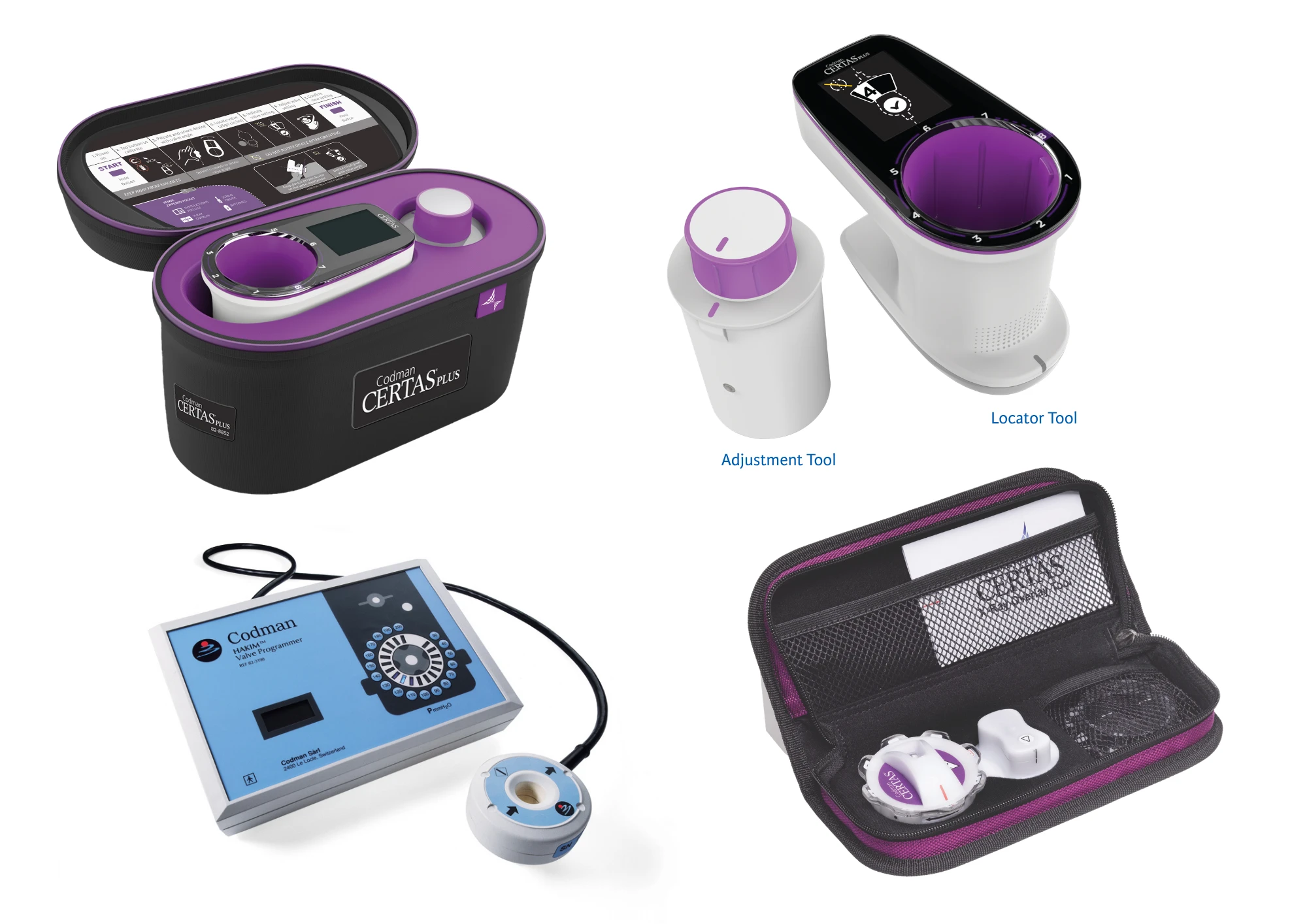
Various Hydrocephalus products, including the Adjustment Tool and the Locator Tool.

How Does the Programming Change the Pressure Setting?

The Codman® CERTAS Plus Programmable Valve and the Codman® Hakim Programmable Valve both use a unique spring, ball, and cone mechanism to establish the pressure setting.

To change the opening pressure of the valve, the tension is adjusted on the spring. A small magnetic device is activated by the programmer and rotates a cam or stepped mechanism, which turns to a new position and creates more or less tension on the spring. More tension on the spring increases the opening pressure, less tension on the spring lowers the opening pressure.

The Codman CERTAS Plus Programmable Valve can only be programmed with the Codman CERTAS Tool Kit or the Codman CERTAS Plus Electronic Tool Kit.

Shunting is only a method for treating hydrocephalus and is not a cure. Therefore, regular visits to your doctor are necessary for the continuing care of this condition.

Since the Codman CERTAS Plus Programmable Valve and the Codman Hakim Programmable Valve are both adjustable, your doctor can adjust the pressure setting of the valve and check the current pressure setting as part of your treatment plan.

If you have any questions concerning the Codman CERTAS Plus Programmable Valve or the Codman Hakim Programmable Valve, contact your doctor.

Some Symptoms* of Shunt Malfunction

Infants

  • Enlargement of the baby’s head
  • Fontanel is full and tense when the infant is upright and quiet
  • Swelling or redness along the shunt track
  • Fever
  • Unexplained irritability
  • Increasing muscle stiffness
  • Difficulty reaching developmental milestones
  • Vomiting
  • Sleepiness
  • Eyes pushed downwards
  • Seizures

Toddlers/Children

  • Head enlargement
  • Fever
  • Vomiting
  • Headache
  • Irritability and/or sleepiness
  • Swelling or redness along the shunt track
  • A loss of previous abilities (sensory motor function)
  • Seizures (very rare)
  • Increasing muscle stiffness
  • Difficulty reaching developmental milestones
  • Personality changes
  • Worsening of school/academic performance

Adults

  • Incontinence
  • Dementia
  • Headache
  • Vision Problems
  • Irritability and/or tiredness
  • Personality change
  • Loss of coordination or balance and/or difficulty walking
  • Seizures (very rare)
  • Difficulty in waking up or staying awake
  • Swelling or redness along the shunt track (infrequent)

This list of symptoms is for your reference only and is not a diagnostic aid. If you are in doubt about your child’s or your own medical condition, consult your doctor immediately.

*List of symptoms was adapted from www.hydroassoc.org

Important information on Magnetic Interference

Magnetic fields generated from microwaves, wireless telephones, high-tension wires, electric motors, and transformers do not affect the valve setting.

If you sustain excessive force resulting in pain or direct trauma of the area over the valve, see your doctor to make sure there is no damage to the valve.

See your doctor for increasing headaches, blurred vision, nausea, vomiting or lethargy, as these may be a sign of valve dysfunction.

CERTAS Plus Programmable Valves 

Testing indicated that use of 3.0 Tesla MRI does not affect this valve’s setting.1,2

However, the clinician will confirm the valve setting after an MRI scan.

Magnets are commonly used in many products in our everyday life. Most valves are subject to unintended setting changes due to the strength, proximity, and hidden nature of everyday magnets.

However, CERTAS Plus programmable Valve is designed to minimize unintended setting changes from magnetic interference, protecting the valve from unintended setting changes due to everyday magnets and 3.0 Tesla MRI machines

CHPV

The use of MRI systems (up to 3 Tesla) will not damage the valve mechanism but may change the operating pressure of the valve. Following any MRI procedure, be sure to confirm the valve pressure setting and reprogram the valve if necessary.

High-powered magnets may affect the valve adjustment when placed close to the valve. Please contact your doctor if you suspect close exposure to strong magnets.

Fixed Pressure and Flow Regulating Valves

All Integra/Codman Flow Regulating Valves and Fixed Pressure Valves are MRI Conditional.

Disclaimers

Only your doctor should adjust the pressure setting on programmable valves.

This content provides a summary of the information regarding the appropriate use of the Codman Hakim Precision Fixed Pressure Valve, the Codman CERTAS Plus Programmable Valve, the Codman Hakim Programmable Valve, the Integra OSV II and Low-Flow Flow Regulating Valves.

It is not a substitute for a thorough discussion with your doctor regarding the use of any Codman valve for your specific medical condition. If you have any questions or want more information, be sure to discuss your questions with your doctor

For important safety information, visit here.

References

1. Data on file. Jacobs Institute Engineering Solutions. Hydrocephalus Shunt Valve Assessment. February 5, 2019. Integra LifeSciences, Plainsboro, NJ, USA.

2. Data on file. Resistance of the Codman CERTAS® Plus Programmable Valve to Unintended Setting Changes When Exposed to a 3 Tesla MRI. February 2016. Integra LifeSciences. Plainsboro, NJ, USA.